
Alpharetta Records and Access Levels
Alpharetta records do not share one search screen. City administrative files pass through the City Clerk or the department that keeps them. Fulton County offices hold deeds, many trial-court files, parcel assessments, tax accounts, probate matters, and local vital certificates. Georgia agencies run statewide business, license, corrections, and vital-record services. These public records are easiest to reach through the named custodian and its documented access channel.
| Record Set | Custodian | Online Index | Access |
|---|---|---|---|
| City permits, planning, council and licensing | Alpharetta City Clerk or responsible department | City site and service portals; coverage varies | GORA request for existing nonexempt files |
| Deeds, liens and plats | Fulton Superior Court Clerk | GSCCCA index; system states 1990 forward | Index plus paid image or Deed Room fallback |
| Trial-court cases | Appropriate Fulton court clerk | Fulton Tyler portal; coverage varies by division | Public unless sealed or restricted; file request available |
| Parcel and tax records | Fulton Board of Assessors / Tax Commissioner | Owner, parcel, address and tax-bill searches | Free web access and office help |
| Birth and death certificates | Georgia DPH / Fulton Board of Health | No open recent-certificate name index | Eligible requester, ID, application and fee |
| Current custody and corrections | Fulton Sheriff / Georgia DOC | Jail inquiry and state offender query | Free basic lookup; phone, desk or records request fallback |
Access can stop at a legal boundary. Sealed, juvenile, adoption, medical, financial-account, and security material may be withheld or redacted. Recent birth and death certificates follow Title 31 eligibility rules. Federal law restricts motor-vehicle personal data. A voter’s protected VoteSafe address is also not an ordinary open field. When part of an agency file is exempt, Georgia law generally calls for the nonexempt portion to be produced after redaction.
Alpharetta Deed Index Access
The Fulton Clerk records deeds, security deeds, liens, plats, surveys, condominium plans, trade names, and UCC filings. Its authorized online route is the GSCCCA Real Estate Search. The consolidated system states that its central index begins January 1, 1990, but users should check the county good-from and good-through control because series coverage varies. Fulton office-held instruments reach the early 1800s.
| Search field | Use | Format or choice |
|---|---|---|
| Party Type | Choose a role or all parties | Grantor, grantee, or all |
| Instrument Type | Narrow the filing kind | Deed, lien, plat-related and many other types |
| County | Limit Alpharetta results | Select Fulton |
| Search Name | Find an indexed party | Last name, first name |
| Date range | Limit recording dates | Month/day/year; start cannot follow end |
| Display | Set results per page | 5 through 100 |
An index result names a party and role, instrument type, county, filing date, book and page, and sometimes cross-references. It is not the full instrument. Images and premium search modes may require an account or payment. For a missing image or older chain, use the Clerk’s Deed Room computer lab. The posted rate is $5 for four hours, and staff do not conduct deed or lien research by telephone.
That gap is one of Fulton’s key record numbers: early-1800s physical holdings reach far beyond the statewide electronic index’s stated 1990 start. The two channels complement each other.
Alpharetta Court Records Route
Alpharetta Municipal Court handles city ordinance and traffic matters. Fulton Superior, State, Magistrate, and Probate courts keep different county case types. The Fulton Tyler Odyssey portal is the online route linked by the Clerk for many court searches, but electronic dates and filters differ by division. Search by case number or party name, then check the court, case type, status, filing date, parties, events, hearings, and disposition shown.
The portal view is a docket, meaning the official list of filings and events. It may not contain every document. Sealed, adoption, juvenile, and other confidential filings stay closed. To obtain the file, use the Fulton Records Search Center, submit the Clerk’s file-request form, or visit the counter with the party names, case number, and division.
The Fulton Records Search Center shows the official bridge between online discovery and clerk copies.
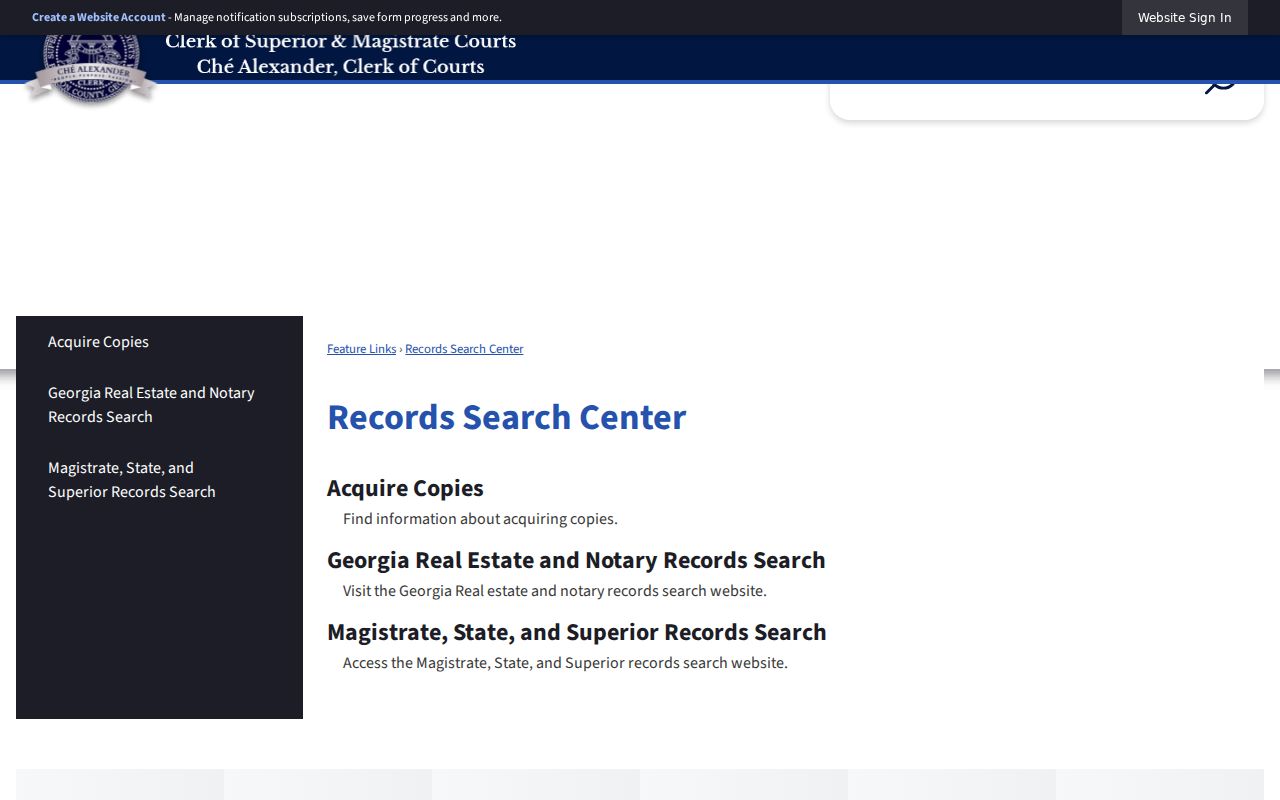
Its separate links matter because land instruments and court dockets use different systems. The Clerk’s form lists plain copies at $0.50 per page and certified copies at $2.50 for the first page plus $0.50 for each added page. It also states a 72-hour delivery period for off-site cases. Confirm the posted schedule before ordering.
Alpharetta Records Custodian Map
Three offices cover most local access needs. Call before visiting a satellite because services can differ by site. The downtown Fulton Clerk address supports court-file and deed-room work, while the state vital office handles eligible certificate requests. City-held administration and permit files use Alpharetta’s designated request channel.
Fulton Clerk Deeds and Records
136 Pryor Street SW, Atlanta, GA 30303
404-613-5313
Georgia State Vital Records
1680 Phoenix Boulevard, Suite 100, Atlanta, GA 30349
Alpharetta Property Record Systems
The Fulton assessor property search accepts owner name, parcel ID, or property address. A parcel card can show the assessed owner, mailing and situs addresses, parcel ID, class, acreage, values, exemptions, legal description, sales, building facts, and map links when populated. “Situs” means the physical parcel address. The owner mailing address is where tax correspondence goes, not proof of residence.
The Board of Assessors sets assessment data, the Tax Commissioner bills and collects, and county GIS supplies map context. Those are separate functions. Fulton’s published parcel service exposes a 2,000-result query limit and detailed ownership, address, value, land-use, and acreage fields. Online boundary lines are aids, not legal surveys. Use a parcel ID to connect the assessor card to a recorded deed or plat.
An Alpharetta postal address does not always fall inside the city limits. ZIP delivery names and municipal boundaries solve different problems. Check the AlphaGIS city-limits layer before seeking a permit, code, planning, or city tax file. If the parcel lies outside the boundary, route the request to Fulton County or the municipality shown by the map. Deed, assessment, and county tax jurisdiction remain tied to the parcel rather than the mailing city printed on an envelope.
Note: A blank parcel-card module means no data is shown there; it does not establish that the underlying fact does not exist.
Restricted Alpharetta Vital Records
Recent certificates are not open name directories. Georgia DPH and the Fulton Board of Health provide birth and death certificates to eligible requesters under O.C.G.A. §§ 31-10-25 and 31-10-26. The applicant must use the current form, provide acceptable identification, show the required relationship or authority, and pay the stated charge. The State Office issues Georgia birth and death certificates from January 1919 forward through online, mail, and in-person channels.
The Georgia Vital Records portal links the current ordering methods and forms.
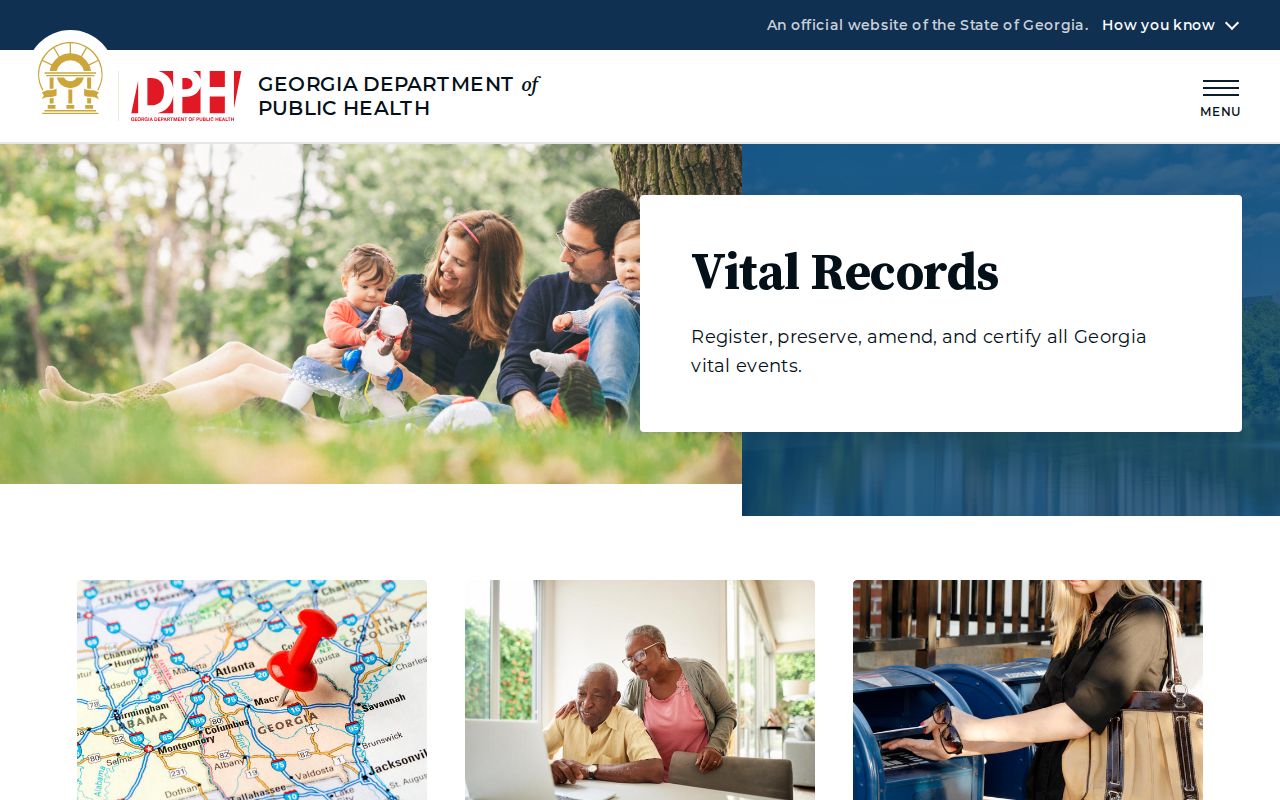
The state screen helps separate eligibility-based certificate orders from public indexes and archival research.
Marriage and divorce use different keepers. Fulton Probate Court issues marriage licenses and certified copies. Fulton Superior Court holds the divorce case and decree, while DPH may provide a verification for covered years. Older evidence may instead come from county books, church or cemetery records, newspapers, probate files, and Georgia Archives.
Alpharetta Custody Record Channels
A recent Alpharetta arrest can create city police, Fulton jail, court, and later state corrections records. These are not one file. The Fulton Sheriff provides an online jail inquiry, two phone lines at 404-613-2002 and 404-662-3516, and a 24-hour Main Jail front desk at 901 Rice Street NW. Basic charge and bond questions can use those channels before a broader request.
The Georgia DOC offender query searches by name, GDC ID, case number, and supported identifying details. For published data that needs confirmation, GDC directs written correspondence to Inmate Records and Information, P.O. Box 1529, Forsyth, GA 31029, or questions to 404-656-4661. Registry information has its own Georgia Bureau of Investigation route. Never use custody or registry data to threaten or harass anyone.
Georgia Records Fees and Terms
Georgia Open Records Act fees depend on the work required. Under O.C.G.A. § 50-18-71(c), an agency may charge reasonable search, retrieval, redaction, production, copy, and media costs. Labor uses the lowest-paid qualified employee’s prorated rate, and the first 15 minutes are free. Ordinary letter or legal copies may cost up to $0.10 per page unless another law sets the price. An estimate is due when cost will exceed $25; prepayment may be required above $500 or after an unpaid prior bill.
- Index
- A list used to locate a filing; it is not always the document image.
- Certified copy
- A copy authenticated by the custodian for an added statutory fee.
- Custodian
- The office that creates or maintains the requested record.
- Exemption
- A legal ground that permits or requires an agency to withhold specific content.
Ask for electronic delivery in the native file format when practical. That can cut copy and conversion work. A clerk’s separate statutory fee schedule still controls court and recorded-document copies.
Why Court Access Differs
One Georgia rule surprises many requesters: trial-court files may be public, but Superior, State, Probate, and Magistrate courts are not agencies governed by GORA. Court access instead follows court rules and clerk procedures. Sending an open-records demand to an unrelated executive office will not produce a court file. Start with the court named on the docket and the clerk division that holds it.
The Fulton Tyler portal confirms the online search route for many Fulton matters.
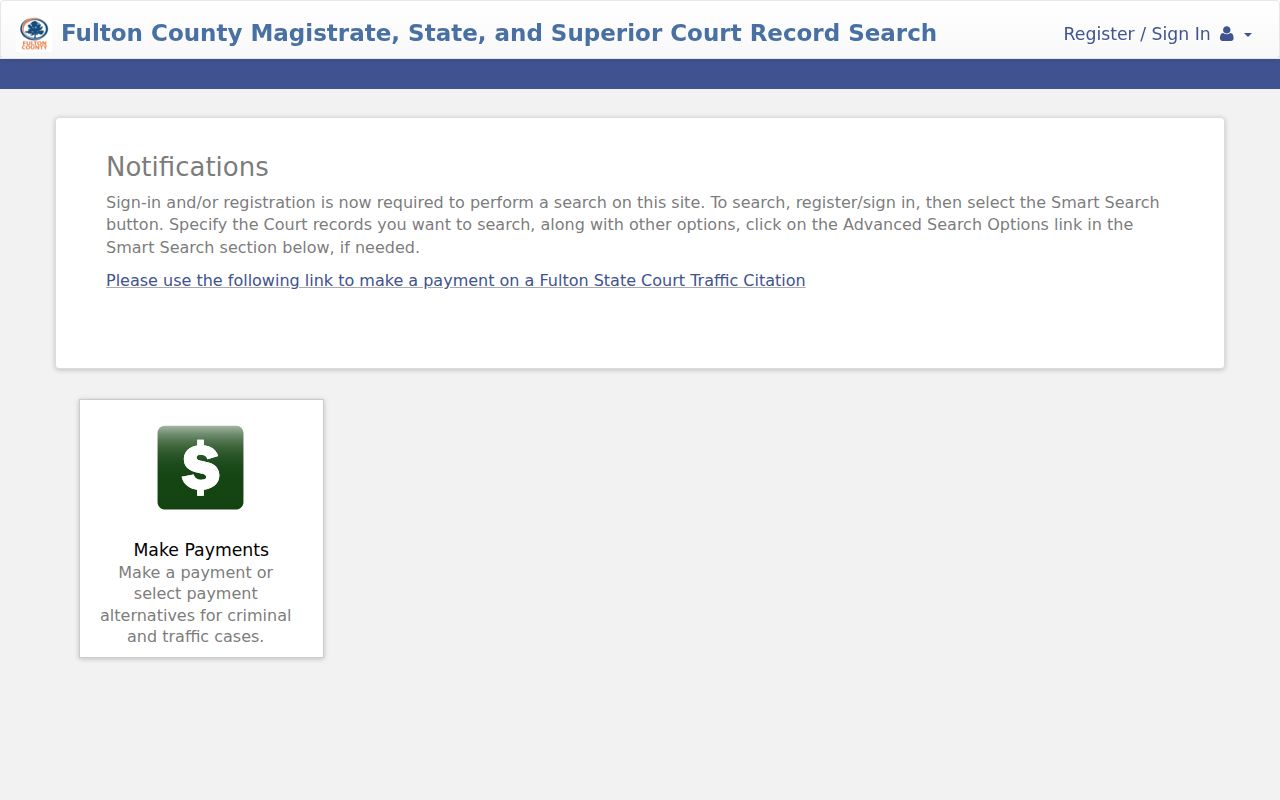
The screen is a starting index, while restricted filings and documents missing online still require the clerk’s review or copy process.
Use records lawfully. Open access does not permit stalking, threats, impersonation, or evasion of a protected-address program. Verify identity and respect every restriction.
Alpharetta Records Scam Warning
Public files can help residents follow local decisions, but the same detail can be copied into a convincing fraud attempt. In an August 2025 scam warning, Alpharetta described emails that used real staff names and facts from public hearings to support fake permit invoices. The city said official email ends in @alpharetta.ga.us and Community Development does not demand wire transfers for its fees.
Confirm an unexpected permit or project charge through an official channel before paying. The city notice directs verification calls to 678-297-6070. Suspected fraud can also be reported through the Georgia Attorney General's consumer complaint channel or the FBI Internet Crime Complaint Center. Use contact details found independently on a government site, not a phone number or link supplied in the message.
Note: Accurate names and project facts do not prove that a payment demand came from Alpharetta or any other public custodian.
Request Alpharetta Public Records
The Georgia Open Records Act, O.C.G.A. §§ 50-18-70 through 50-18-77, opens existing nonexempt agency files for inspection and copying. A written request protects enforcement rights and helps the office locate the right material. Production is due within three business days when available. If more time is needed, the agency must give a written timetable and cost response. A denial must identify the exact Code provision supporting it.
The Attorney General publishes a request guide and model form.
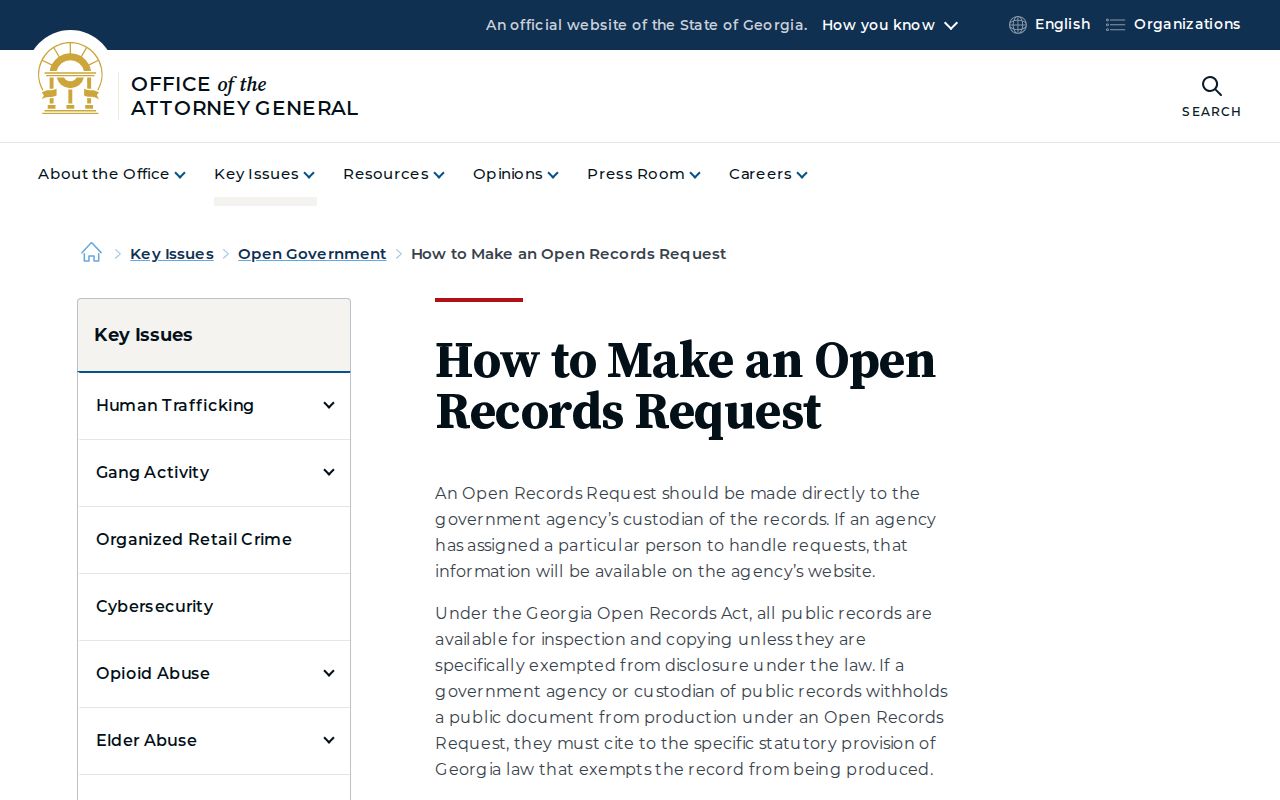
The model captures the facts that reduce delay: custodian, date range, record type, identifiers, delivery format, and a cost ceiling.
- Identify the office that created or keeps the item. Use Alpharetta’s city channel for city files, and the named Fulton or state custodian for its records.
- Describe records, not questions. Give the file type, department, date span, address, permit, case or document number, and known spelling variants.
- Submit in writing through the designated portal, email, mail, or office channel. Request inspection or copies and the preferred electronic format.
- Set a cost ceiling and ask for approval before work exceeds it. Keep the sent request, estimate, payment, and response.
- If material is withheld, ask for the exact exemption and the nonexempt remainder. GORA disputes may use Attorney General mediation or the civil remedy in § 50-18-73.
A broad request can be narrowed without giving up the needed evidence. Ask which date span, division, file type, or identifier would reduce labor. If an agency has responsive electronic data, request the existing fields rather than a custom analysis. For a wrong-office response, preserve it and resend the same precise description to the actual custodian. Court-file disputes stay with the clerk and court process because GORA does not govern trial courts. Georgia law does not require an agency to create a report, answer, or list it does not maintain.